Why dine in Soho, London: the complete food lover’s guide
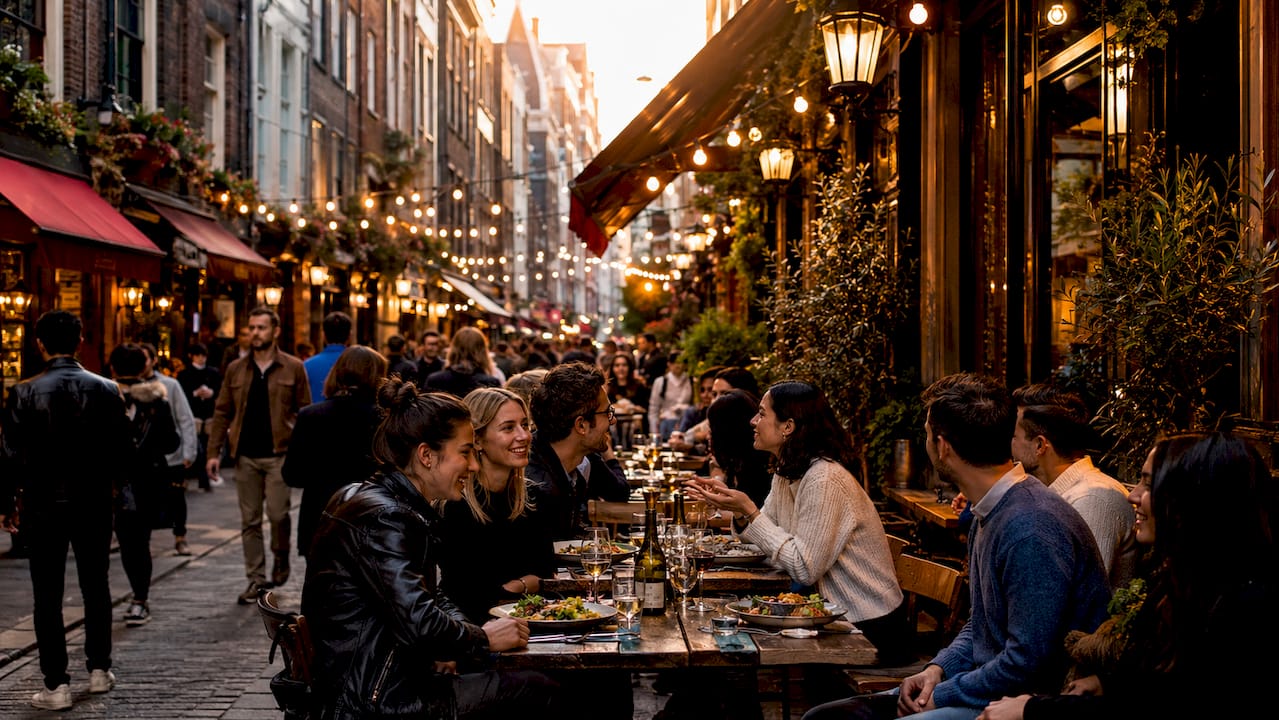
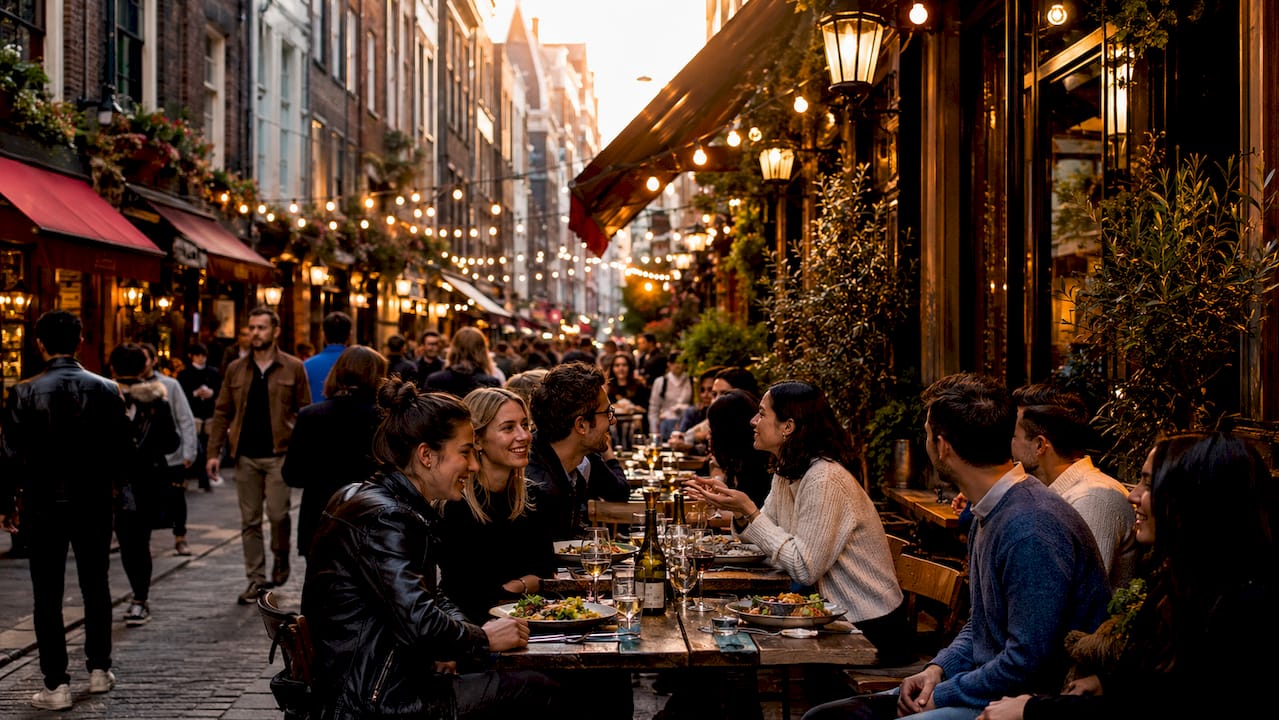
Soho is London’s most concentrated dining district, packing more culinary variety into a single square mile than almost any other neighbourhood in the city. The case for why dine in Soho London comes down to three things: location, variety, and the way the area folds restaurants, bars, and West End theatres into one walkable grid. You can eat Japanese small plates on Frith Street, follow it with a Negroni on Dean Street, and walk to the Lyric Theatre in under ten minutes. No other London district makes that combination this effortless. For food enthusiasts and first-time visitors alike, Soho is not just a place to eat. It is the place to eat.
Why dine in Soho, London? The core case
Soho’s dining scene earns its reputation because of geography as much as gastronomy. Almost every restaurant in Soho sits within a 15-minute walk of major West End theatres. That single fact reshapes how an entire evening works. You book a show at the Shaftesbury Theatre or the Palladium, then choose from dozens of restaurants within easy reach, without factoring in a taxi or a Tube journey.
Soho also serves a genuinely mixed crowd. Locals, office workers, tourists, and theatre-goers all share the same streets, which pushes restaurants to maintain quality across every price point. A neighbourhood that only serves tourists tends to coast. Soho cannot afford to, because its regulars know better.

The district has also evolved its dining patterns faster than most of London. Pre-theatre dining is now a defined product here, not an afterthought. Menus are priced and timed to fit show schedules, and the pre-theatre dining menus in Soho range from £32.50 to £74.00. That range covers a quick weekday supper and a celebratory dinner with equal ease.
How does Soho’s location enhance the dining experience?
Soho sits at the heart of the West End, bordered by Oxford Street to the north, Charing Cross Road to the east, and Regent Street to the west. That position is not incidental. It places the neighbourhood at the intersection of London’s biggest shopping corridors, its most famous theatres, and its densest concentration of bars and clubs.
The walkability factor is the practical advantage most visitors underestimate. West End shows typically start at 19:30 or 19:45. A 15-minute walk from any Soho restaurant to a major theatre means you can sit down for dinner at 18:00, eat without rushing, and still arrive at your seat with time to spare. Compare that to dining in Mayfair or Covent Garden, where the walk or cab ride adds a logistical layer that Soho simply removes.
The proximity also reduces the anxiety around timing. Soho’s restaurants understand this. Staff at the best pre-theatre venues pace meals to fit the show timetable without making guests feel hurried. That attentiveness is a trained skill, not a coincidence.
Key location advantages for Soho diners:
- Every major West End theatre is reachable on foot in under 15 minutes
- No need for taxis or public transport between dinner and the show
- Multiple dining options on every street allow last-minute changes without stress
- The compact grid means you can walk between restaurants before committing to a table
- Late-night bars and clubs are steps away for after-show drinks
Pro Tip: Book your restaurant before buying theatre tickets. Knowing your dining location first lets you choose a show at the nearest theatre rather than working backwards from a venue.
West End tickets often sell for £56 or less, which makes the lower end of Soho’s pre-theatre menu pricing genuinely affordable for a full evening out. The maths work in your favour when you plan both together.
What variety and culinary styles make Soho a top dining destination?
Soho functions as London’s culinary laboratory, where established and emerging chefs debut experimental concepts before they spread to other parts of the city. That description is not marketing language. It reflects a real pattern: restaurants that later became London institutions, from Barrafina on Frith Street to Bao on Lexington Street, built their reputations in Soho first.
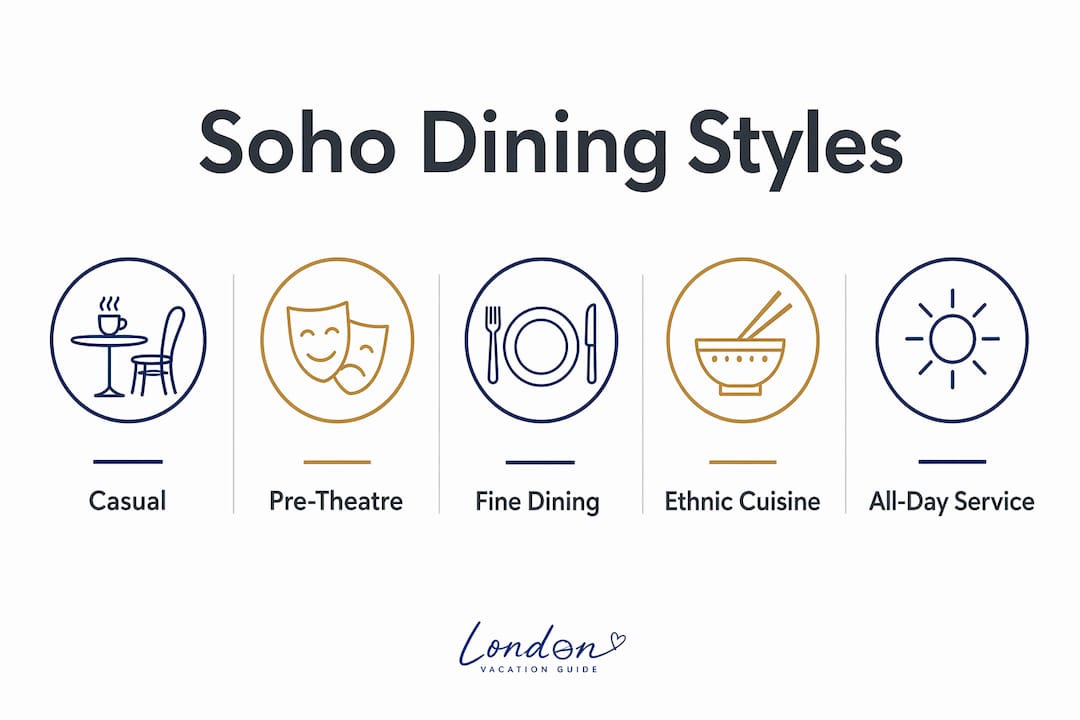
The range of cuisines available within a few streets is genuinely unusual. You will find Italian trattorias, Taiwanese bao bars, French bistros, modern British tasting menus, ramen shops, and Cantonese roast meat restaurants all within a ten-minute walk of each other. That density allows comparison shopping in a way that no other London neighbourhood quite matches.
Soho dining styles compared
| Style | Best for | Price range |
|---|---|---|
| Italian trattoria | Relaxed group dinners | £25–£45 per head |
| Japanese small plates | Solo diners and couples | £30–£55 per head |
| Modern British tasting menu | Special occasions | £65–£120 per head |
| Taiwanese street food | Quick, casual meals | £15–£25 per head |
| French bistro | Pre-theatre dining | £32–£60 per head |
The Soho food scene also supports both ends of the formality spectrum without awkwardness. A Michelin-starred room and a counter-service noodle bar can occupy the same street. That coexistence keeps the neighbourhood accessible regardless of budget or occasion.
What the variety means in practice:
- Groups with mixed dietary requirements find options more easily than in specialist neighbourhoods
- Solo diners are well catered for at counter seats and open kitchens
- Repeat visitors can eat somewhere genuinely different on every trip
- Experimental menus sit alongside reliable classics, so risk-averse diners are not excluded
Soho also attracts chefs who want visibility. The foot traffic is high, the press attention is consistent, and the audience is sophisticated. That competitive pressure keeps standards up across the board, which benefits every diner regardless of where they choose to eat.
How has Soho’s dining scene adapted to modern eating habits?
Soho’s restaurants have increasingly adopted an all-day dining model, staying open continuously rather than closing between lunch and dinner service. That shift matters more than it sounds. Most London neighbourhoods still observe a dead zone between roughly 15:00 and 18:00, when kitchens close and options disappear. Soho largely does not have that problem.
The all-day model serves three distinct groups particularly well. Office workers in the surrounding streets of Soho and Fitzrovia can eat at 14:30 without hunting for a café. Tourists exploring the West End can stop for a proper meal at 16:00 without being turned away. Theatre-goers arriving early for a 19:30 show can eat at 17:00 without feeling like they are eating at an unusual hour.
Many Soho establishments have abandoned rigid split shifts entirely, embracing continuous kitchen operation. That resilience keeps the neighbourhood vibrant through fluctuating food trends and seasonal visitor patterns.
Who benefits most from all-day dining in Soho:
- Tourists on flexible itineraries who eat when hungry, not when restaurants dictate
- Theatre-goers who want an early dinner without rushing
- Office workers seeking lunch outside the standard 12:00–14:00 window
- Late-night visitors who want a proper meal after 22:00
Pro Tip: If you want a relaxed meal with attentive service, aim for 14:30–17:00. Kitchens are open, tables are available, and staff have time to talk you through the menu properly.
The all-day dining trend also reflects a broader shift in how Londoners eat. Strict meal times are giving way to grazing and flexible schedules. Soho adapted to this faster than most districts, which is one reason it continues to draw diners who might otherwise stay in their own neighbourhoods.
What practical tips help you get the most from Soho dining?
Timing is the single biggest variable in the Soho dining experience. Peak pre-theatre dining hours run between 17:00 and 19:00. During that window, the most popular restaurants fill quickly, service is faster by necessity, and the atmosphere is energetic but occasionally rushed. Dining outside those hours produces a noticeably different experience.
Five practical tips for dining in Soho
-
Book at least 48 hours ahead for pre-theatre slots. The best-known restaurants fill their 18:00 and 18:30 tables days in advance, particularly from thursday through saturday. Walk-ins are possible but unreliable for groups of three or more.
-
Explore one block off the main corridors. High-quality restaurants with better availability are often found just one block away from Shaftesbury Avenue and Old Compton Street. Berwick Street, Romilly Street, and Greek Street consistently reward diners who look beyond the obvious choices.
-
Tell your server about your theatre start time immediately. Well-trained Soho staff use that information to pace your meal correctly. They will not rush you, but they will flag when you need to order dessert to make your curtain time comfortably.
-
Match the restaurant style to your occasion. A tasting menu before a two-hour show is a poor combination. Choose something with a clear two-course or three-course pre-theatre menu that is designed to be satisfying and swift.
-
Arrive before 17:30 if you want a relaxed pre-theatre meal. Arriving at 17:30 gives you 90 minutes before a 19:00 show. That is enough time for three courses without feeling pressured, and you will beat the main rush by 30 minutes.
Pro Tip: Check whether your chosen restaurant offers a dedicated pre-theatre menu rather than the standard à la carte. Pre-theatre menus are priced lower, move faster, and are specifically designed to get you out on time.
The Soho dining experience rewards preparation. The neighbourhood has enough options that spontaneous dining works, but the best tables at the best times go to those who plan ahead.
How does Soho maintain its status as London’s most complete dining district?
Soho surpasses other London districts by integrating dining, bars, and entertainment within a single walkable grid. That completeness is what separates it from neighbourhoods with equally good food but less flexibility. Mayfair has excellent restaurants but limited late-night energy. Shoreditch has strong bars and street food but fewer formal dining rooms. Soho has all of it within a ten-minute walk in any direction.
The compact scale of Soho encourages spontaneous switching between restaurants, bars, and entertainment. If a restaurant is full, the next option is 200 metres away. If the mood changes after dinner, a jazz bar, a cocktail lounge, or a late-night kitchen is equally close. That adaptability is rare in London and almost impossible to replicate in larger, more spread-out neighbourhoods.
How Soho compares to other London dining districts
| District | Dining quality | Late-night options | Theatre proximity | Walkability |
|---|---|---|---|---|
| Soho | Excellent | Excellent | Excellent | Excellent |
| Mayfair | Excellent | Limited | Good | Good |
| Shoreditch | Very good | Excellent | Poor | Good |
| Covent Garden | Good | Good | Excellent | Good |
| Fitzrovia | Very good | Limited | Good | Good |
Soho also sustains diversity in menus and atmosphere because it serves such a mixed audience. A neighbourhood that relies on a single type of visitor becomes homogeneous over time. Soho’s blend of locals, workers, tourists, and theatre-goers forces restaurants to stay interesting and varied. That pressure produces a better dining environment for everyone.
The long-term appeal of Soho is also rooted in its mix of dining styles, from formal rooms to casual counters. You can dress up for a tasting menu or drop in for a bowl of ramen in jeans. Both experiences are equally valid and equally well-served. That flexibility is what keeps Soho relevant across generations of diners.
Key takeaways
Soho is London’s most complete dining district because it combines walkable theatre access, all-day service, genuine culinary variety, and late-night flexibility within a single compact neighbourhood.
| Point | Details |
|---|---|
| Unmatched location | Every major West End theatre is within a 15-minute walk of any Soho restaurant. |
| Pre-theatre pricing | Soho pre-theatre menus range from £32.50 to £74.00, covering casual and celebratory occasions. |
| All-day dining | Soho kitchens operate continuously, filling the mid-afternoon gap that closes most London restaurants. |
| Side street advantage | One block off Shaftesbury Avenue, quality stays high and availability improves significantly. |
| Complete evening options | Dining, bars, theatres, and late-night venues all sit within a ten-minute walk of each other. |
Soho’s dining scene is better than its reputation suggests
People who have not eaten in Soho recently tend to assume it is overpriced and overcrowded. That assumption is outdated. Yes, the main corridors get busy between 18:00 and 19:30. But Soho’s side streets, particularly Romilly Street, Bateman Street, and the quieter end of Greek Street, consistently deliver high-quality meals with less competition for tables.
What genuinely impresses me about Soho is how the neighbourhood has handled the shift to all-day dining. Other parts of London still treat the 15:00–17:00 window as dead time. Soho treats it as an opportunity. Some of the best meals I have had in the area happened at 16:00 on a tuesday, when the kitchen was relaxed, the room was half-full, and the chef had time to send out something extra.
The pre-theatre dining culture here is also more sophisticated than visitors expect. The best Soho restaurants do not just offer a cheaper menu before 19:00. They design the entire experience around the theatre schedule, from portion sizing to service pacing. When a server asks what time your show starts and then manages your meal accordingly, that is a level of hospitality that most London neighbourhoods simply do not deliver.
My honest advice: ignore the main drag on your first visit. Walk one block in any direction from Old Compton Street and you will find the Soho that regulars actually use. The food is just as good, the prices are often lower, and the experience is considerably more relaxed.
— Matt
Plan your Soho visit with London Vacation Guide
London Vacation Guide has everything you need to make the most of a trip to Soho and beyond. The first-time visitor guide covers dining, neighbourhoods, and practical planning in one place, which is the right starting point if Soho is part of a longer London trip. For deeper neighbourhood context, the Soho neighbourhood guide covers the area’s character, best streets, and what to expect at different times of day. If you want to compare Soho with other parts of the city, the London neighbourhood guides cover every major area with the same level of detail. Soho is exceptional, but London has more to offer than one square mile.
FAQ
Why is Soho the best area to dine in London?
Soho combines walkable access to West End theatres, continuous all-day service, and a higher density of diverse restaurants than any other London district. That combination makes it the most practical and varied dining area in the city.
What time should I eat in Soho before a West End show?
Pre-theatre dining in Soho generally runs between 17:00 and 19:00. Arriving by 17:30 gives you enough time for three courses before a 19:30 curtain without feeling rushed.
How much does pre-theatre dining in Soho cost?
Pre-theatre menus in Soho range from £32.50 to £74.00 per person. The lower end suits casual weeknight meals, while the upper range covers more formal, celebratory dinners.
Are there good restaurants on Soho’s side streets?
High-quality restaurants with better table availability are consistently found one block away from Shaftesbury Avenue and Old Compton Street. Streets like Romilly Street, Berwick Street, and Bateman Street are reliable choices for less crowded dining.
Does Soho serve food all day?
Most Soho restaurants now operate continuous kitchen service rather than closing between lunch and dinner. This makes the neighbourhood one of the few areas in London where you can reliably find a full meal between 15:00 and 18:00.
Recommended
- Why stay in soho, london: your 2026 neighbourhood guide - The London Journal | London Vacation Guide
- London’s Best Restaurants: Where to Eat in Every Neighborhood - The London Journal | London Vacation Guide
- Local dining guide London: find authentic food experiences - The London Journal | London Vacation Guide
- Must-try London foods: the definitive 2026 guide - The London Journal | London Vacation Guide